October 9, 2026

Day: October 9, 2026

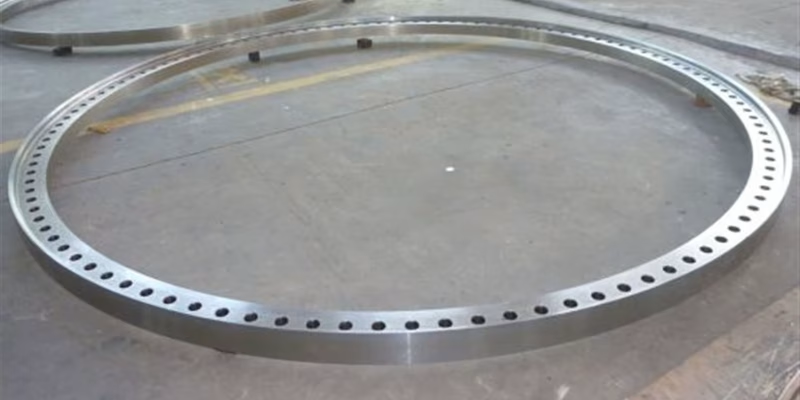
Offshore wind is one of the harshest service environments in engineering, and its fasteners are the least protected part of the machine. Tower flange bolts, nacelle fittings and foundation connections sit in a permanent bath of salt-laden spray, temperature swings, vibration and cyclic load—in locations that are effectively impossible to reach for maintenance. When a […]

Connect two different metals in the presence of moisture and one of them will quietly start to dissolve. This is galvanic corrosion, the most common—and most preventable—form of metal attack in mixed-metal assemblies. Understanding how it works lets engineers avoid failures that no amount of paint alone can stop. The Principle: A Battery You Never […]

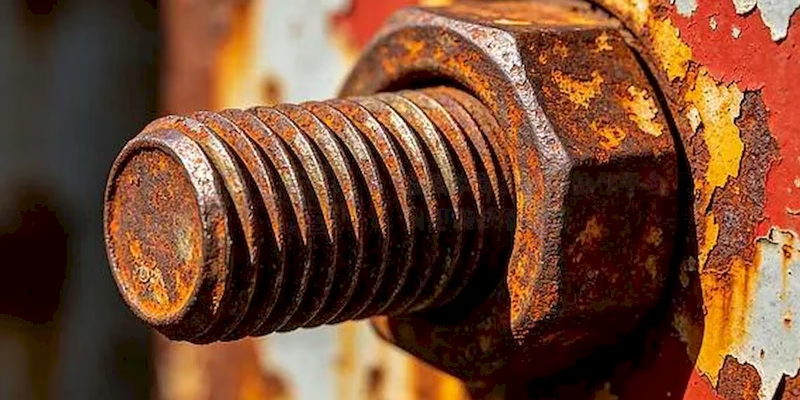
A bolt looks like the strongest, most durable part of an assembly—and it often is the one that fails first. Fasteners corrode faster than the flat sheets they join, and the reasons are baked into their geometry, their metallurgy, and the way they are used. Here is why the humble bolt is a corrosion hotspot. […]

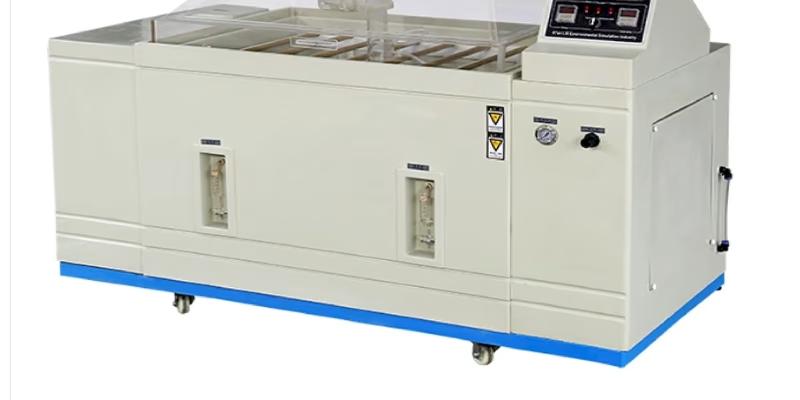
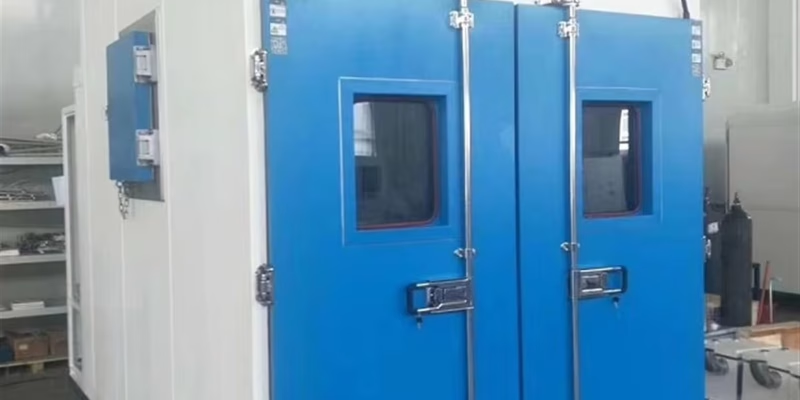
Salt spray testing is the most widely used laboratory method for evaluating corrosion protection, and it is also the most widely misunderstood. A result like “1000 hours salt spray” appears on datasheets, coating certificates, and product claims everywhere. But what does that number actually mean—and can it really predict how long a coating will survive […]

Metal corrosion is the quiet force behind billions of dollars in equipment failure, unplanned downtime, and premature replacement every year. For engineers and buyers working with fasteners, structural parts, and coated components, a single word like “corrosion” is not enough. Each deterioration mechanism works differently, appears in a different environment, and demands a different protection […]

Independent certification is how we prove that process and product meet the strictest expectations. Behind every coating we ship is a quality system that governs how materials are received, how parts are processed, and how finished goods are inspected and released. IATF 16949 — Automotive Quality IATF 16949 is the global automotive quality standard. It […]

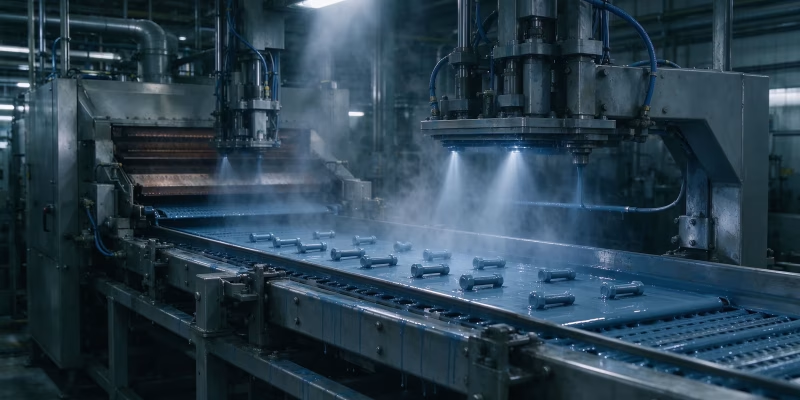
The value of a coating is decided in the process, not in the chemistry alone. Two coatings with the same chemistry can perform very differently depending on how they are applied. That is why BOL Chemistry treats the whole line — pretreatment, application, curing and inspection — as one engineered system. Step 1 · Pretreatment […]

In aviation there is no margin for a flawed fastener. Every part that joins an airframe must hold under extremes of temperature, vibration and corrosion exposure while meeting the industry’s most demanding specifications. It is exactly the standard we design our aviation coating to — and it has been trusted on a program at the […]

Offshore wind turbines are built to stand for two decades in one of the most corrosive environments on earth. Salt spray, humidity, temperature swings and continuous vibration attack every exposed component — and the bolts holding a turbine together are among the most critical. When a tower flange or blade fastener fails, the cost is […]

In modern automotive manufacturing, the fastener is easy to overlook — until a corroded bolt on a chassis, suspension or brake assembly begins to fail. Corrosion does more than spoil appearance: it alters friction, loosens clamping force, and eventually compromises the safety-critical joints that hold a vehicle together. For OEMs and tier suppliers, that risk […]