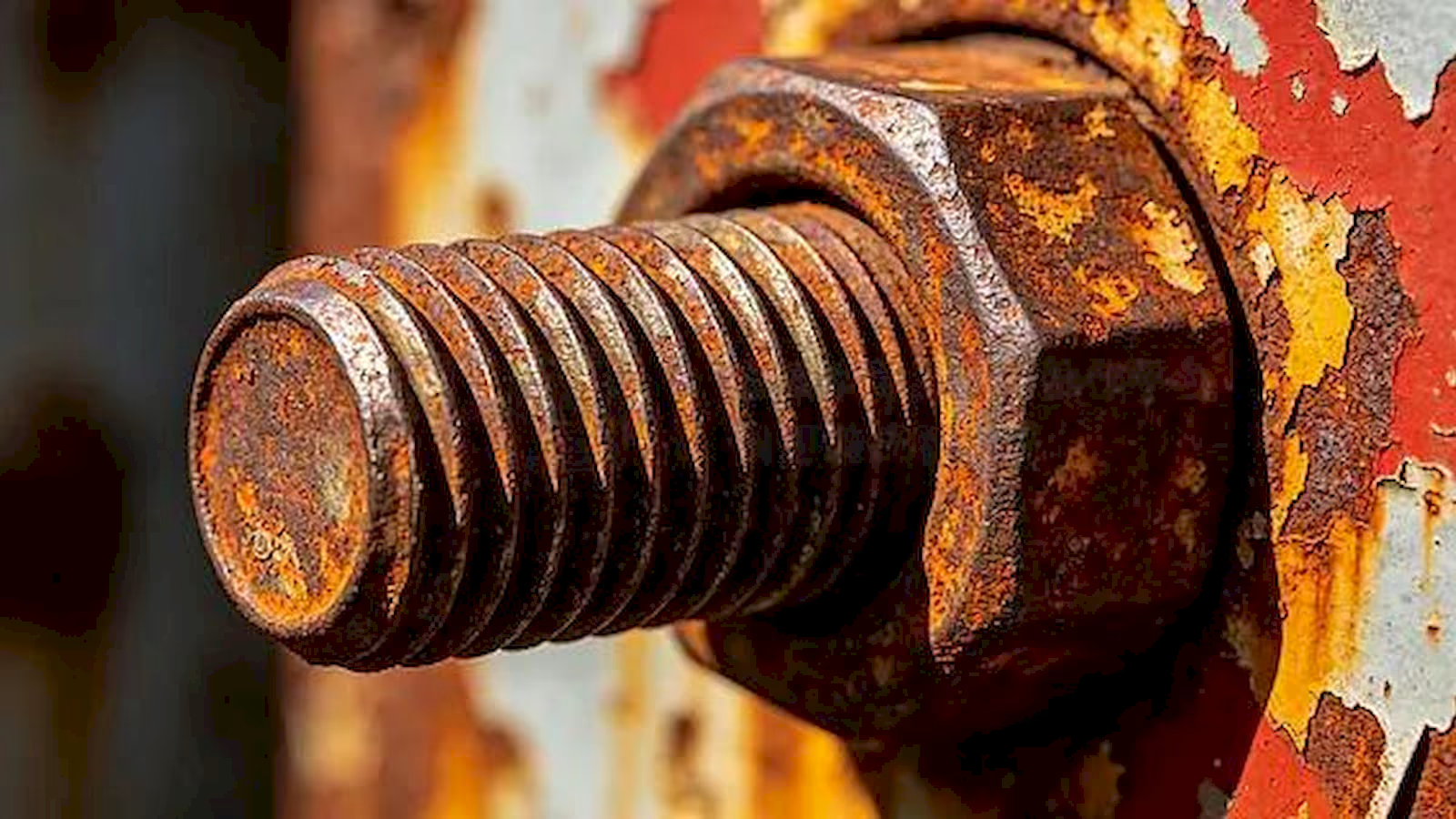
A bolt looks like the strongest, most durable part of an assembly—and it often is the one that fails first. Fasteners corrode faster than the flat sheets they join, and the reasons are baked into their geometry, their metallurgy, and the way they are used. Here is why the humble bolt is a corrosion hotspot.
Threads Are Built-In Crevices
A thread is a narrow, dead-ended gap. When moisture enters, it gets trapped and stagnates, creating exactly the conditions for crevice corrosion. The electrolyte inside the thread becomes depleted of oxygen and acidified, and the metal corrodes aggressively while the outside of the fastener looks clean. The deeper and finer the thread, the harder it is to keep sealed.
They Form Galvanic Couples Everywhere
Fasteners are almost always a different metal from the structure they hold. A carbon-steel bolt in a stainless or aluminium frame creates a galvanic cell, and because the fastener is usually the more active metal, the bolt becomes the sacrificial anode. The result is accelerated corrosion exactly where the load-bearing threads sit.
High Stress Lowers Corrosion Resistance
Fasteners are preloaded to high tensile stress, and stressed metal is more vulnerable. Under stress, a corrosive environment can produce stress corrosion cracking, where cracks propagate through the bolt with little visible warning. High-strength fasteners and springs are the most at risk, and the failure can be sudden and total.
Small Surface Area, High Stakes
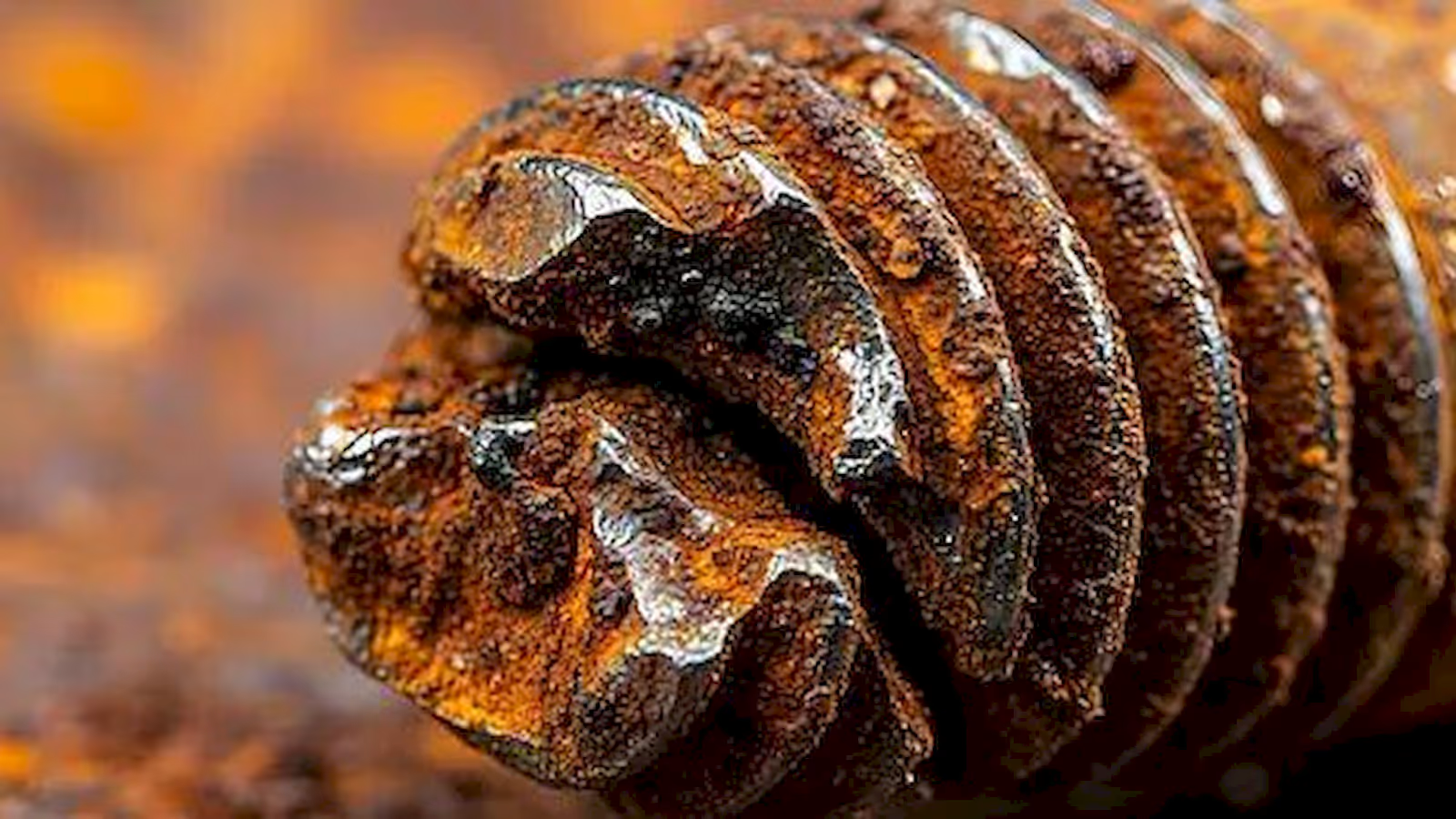
A fastener carries a large part of the load on a very small surface. A tiny pit, a scratched thread, or a chip in the coating removes a proportionally huge share of the protection. On a large flat panel, a small coating defect is cosmetic; on a bolt, the same defect sits at a stress raiser under load and in a crevice. The margin for error is far smaller.
The Plating Problem: Hydrogen Embrittlement
Many fasteners are protected by electroplating, and the plating process itself can inject hydrogen into the steel. For high-strength fasteners, this hydrogen can trigger hydrogen embrittlement, causing a delayed, brittle failure hours or days after installation. This is a serious reason why mechanical, hydrogen-free coatings—such as zinc-flake and Dacromet-type systems—are preferred for hardened fasteners.
Even “Stainless” Is Not Immune
Stainless-steel fasteners resist general rust, but in chloride-rich environments (seawater, road salt, coastal air) they suffer pitting and crevice corrosion on the threads and under the head. The oxide film that protects them can break down locally, and a single pit on a stressed thread can be fatal.
Protection That Matches the Challenge
Because fasteners combine crevices, stress, galvanic contact, and small area, they need protection that is simultaneously sacrificial, barrier-forming, and hydrogen-free. Zinc-flake coatings deliver all three: they protect the steel sacrificially, they form a dense barrier that seals threads, and because they are applied mechanically rather than electroplated, they do not risk hydrogen embrittlement. Dry-film lubricants can be added on top to control clamping force while sealing the surface.
The lesson for engineers is to stop treating fasteners as an afterthought. Choose the coating with the same care as the alloy, and verify it for the specific stresses and chlorides the assembly will face—not just for a generic salt-spray number.