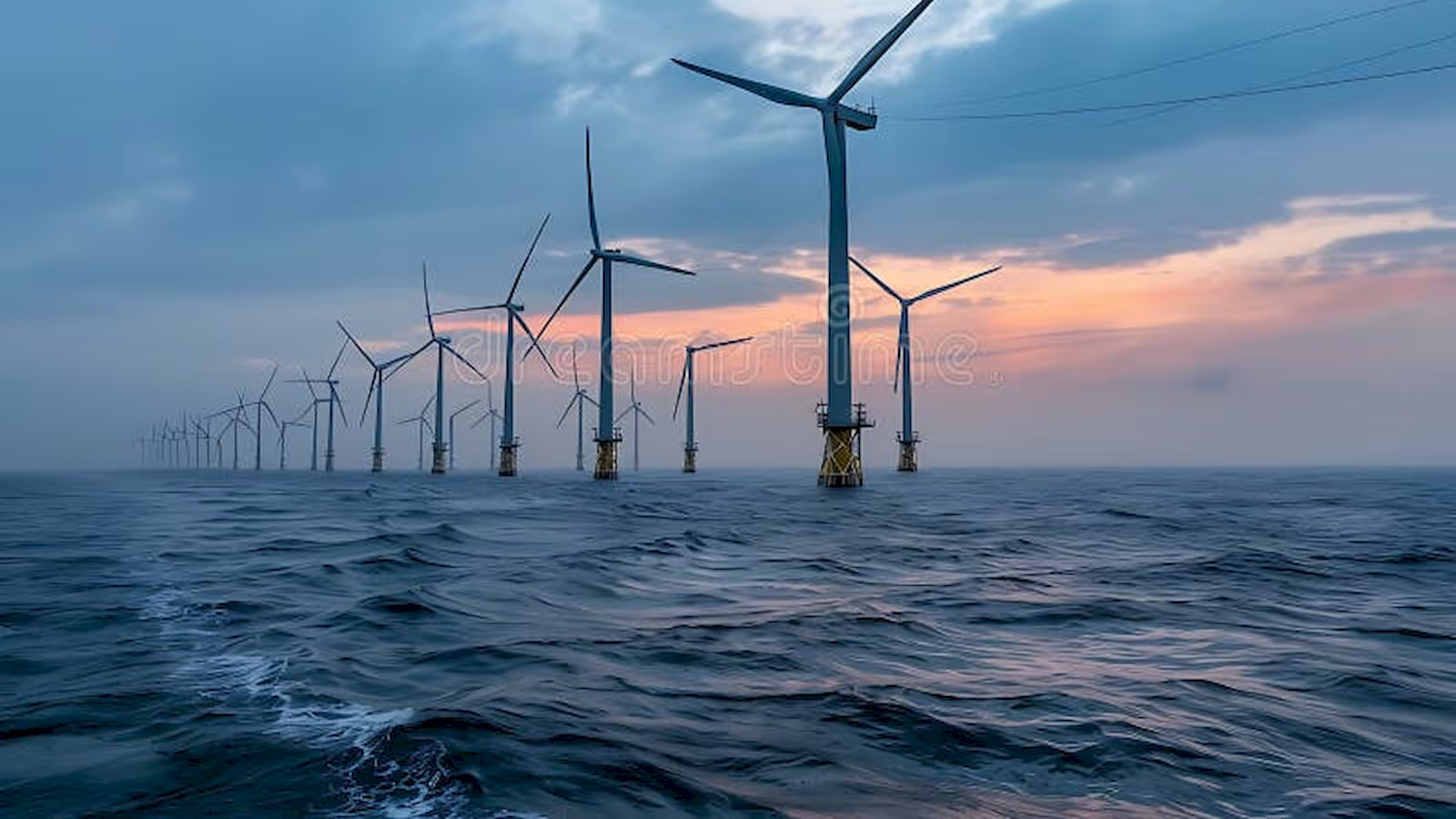
Offshore wind is one of the harshest service environments in engineering, and its fasteners are the least protected part of the machine. Tower flange bolts, nacelle fittings and foundation connections sit in a permanent bath of salt-laden spray, temperature swings, vibration and cyclic load—in locations that are effectively impossible to reach for maintenance. When a bolt fails, it is not a part replacement; it is downtime, access vessels, and a safety event on a multi-million-euro asset.
The Environment That Kills Offshore Fasteners
A bolted joint at sea does not face one corrosion mechanism; it faces several at once:
- Continuous salt exposure. Sodium chloride from sea spray provides a permanent electrolyte that keeps galvanic and pitting attack active.
- Galvanic corrosion. Fasteners are almost always a different metal from the flange they join, so the more active metal corrodes sacrificially.
- Crevice corrosion. Threads and flange faces are dead-ended gaps where stagnant salt water becomes trapped and acidified.
- Fatigue and stress corrosion. Tower bolts carry high preload plus bending and vibration cycles, conditions under which even a small pit can grow into a crack.
- Hydrogen embrittlement risk. High-strength bolts (10.9 and 12.9 class) can fail from hydrogen introduced during electroplating—quietly, and often after installation.
Why Conventional Protection Falls Short
Traditional finishes struggle in this environment for specific reasons:
- Electroplated zinc carries a real hydrogen embrittlement risk on high-strength steel, and deposits unevenly—thinnest exactly on the thread roots where protection matters most.
- Hot-dip galvanizing is thick enough to corrode thread tolerances and is hard to control on complex geometries; the coating can also be chipped during handling.
- Paints and barriers only protect where the film is intact. Any scratch at a stressed thread re-opens the circuit, and a barrier cannot stop galvanic or crevice attack underneath.
How Dacromet-Type Zinc Flake Coating Works
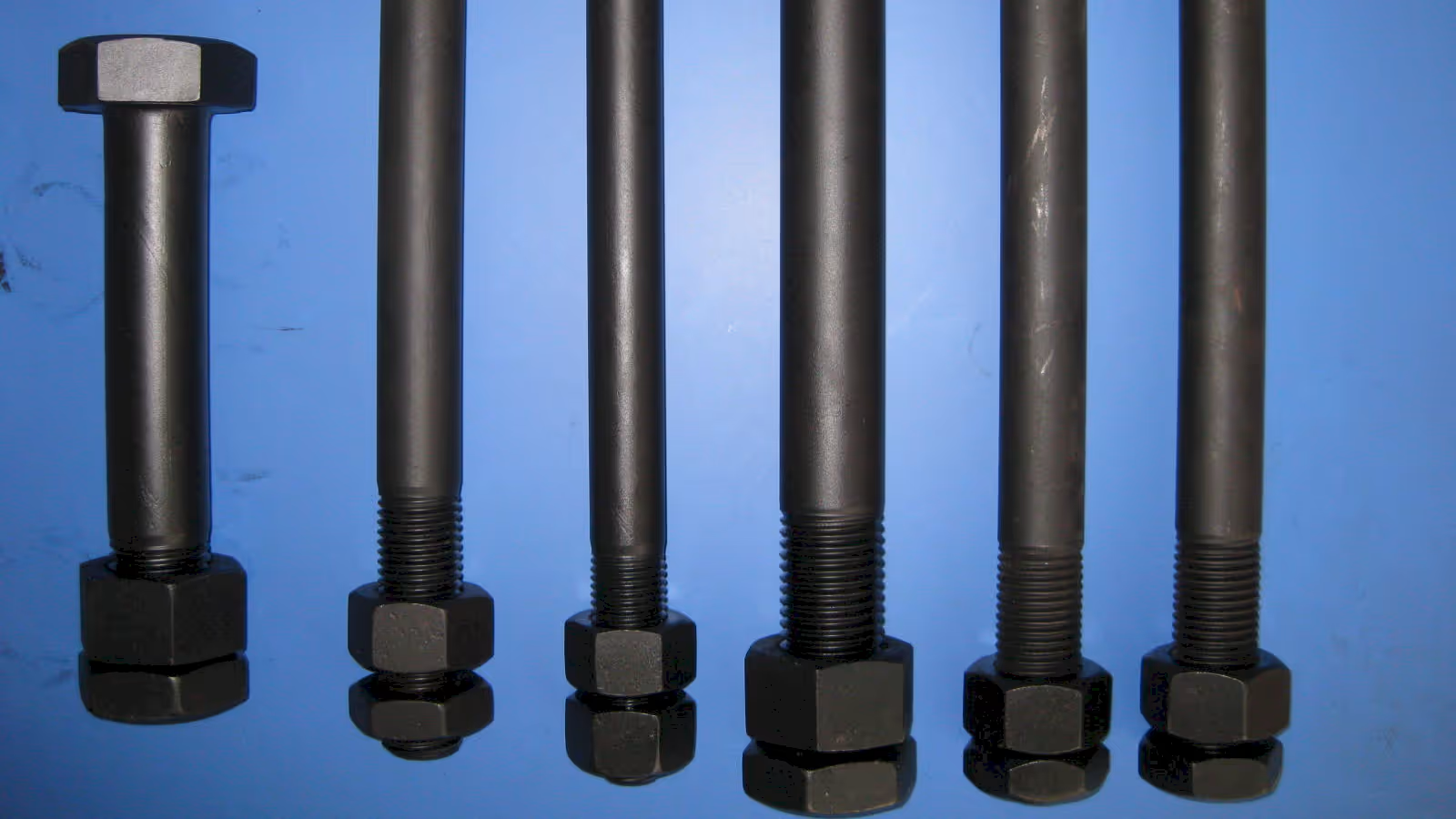
A Dacromet-type system is a thin layer of zinc and aluminium flakes bonded in an inorganic matrix. It protects fasteners through three simultaneous mechanisms that offshore bolts specifically need:
- Sacrificial protection. Zinc is more active than steel, so the coating corrodes instead of the base metal—even where the film is scratched, the exposed steel stays protected.
- Hydrogen-free application. It is applied mechanically (dip-spin or spray) and baked, with no electrolytic step, so no hydrogen is introduced. This makes it suitable for 10.9 and 12.9 class bolts that electroplating can embrittle.
- Uniform coverage on threads. The coating wets the full geometry, sealing the crevices that threads create—something dipped-and-baked thin films achieve far better than electroplating.
Because the matrix is inorganic, the film also resists high temperature and many chemicals, and a lubricating topcoat can be added to control the friction coefficient during installation.
BOL’s BOLX310 is a Dacromet-type zinc-flake coating engineered for exactly this duty. It applies the sacrificial, hydrogen-free and thread-sealing principles above to offshore and coastal fasteners, and can be paired with a dry-film lubricant to hold the friction band that tower and flange designers specify.
Where It Is Used Offshore
- Tower flange bolts. The most critical application—high-strength, preloaded, and exposed to bending fatigue plus constant salt.
- Nacelle and yaw-system fasteners. Load-bearing joints inside a partially ventilated housing that still sees condensation and chlorides.
- Blade-to-hub connections. Fasteners under rotating load where any failure is a major safety and availability issue.
- Foundation and transition-piece bolts. Splash-zone joints where corrosion is most aggressive.
Key Numbers Engineers Care About
| Property | Typical Value | Why It Matters Offshore |
|---|---|---|
| Neutral salt spray (ISO 9227) | ≥1000 h to red rust | Years of accelerated testing in the splash zone |
| Hydrogen embrittlement | None (mechanical application) | Safe for 10.9 / 12.9 class bolts |
| Coating thickness | 8–10 µm, uniform | Preserves thread tolerances |
| Friction coefficient | 0.08–0.14 with topcoat | Controlled, repeatable clamping force |
What This Means in Practice
Selecting offshore fasteners on salt-spray hours alone is not enough. The bolts must also resist hydrogen embrittlement, seal their own threads against crevice attack, and give a predictable friction for accurate preload. A Dacromet-type system is one of the few finishes that meets all of these at once, which is why it has become a default specification for wind-energy and coastal infrastructure fasteners rather than an exception.
The practical lesson for design and procurement teams: specify the coating for the whole failure chain—not just corrosion, but embrittlement, thread geometry and assembly control—and verify it on the exact bolt grade and torque you will install.