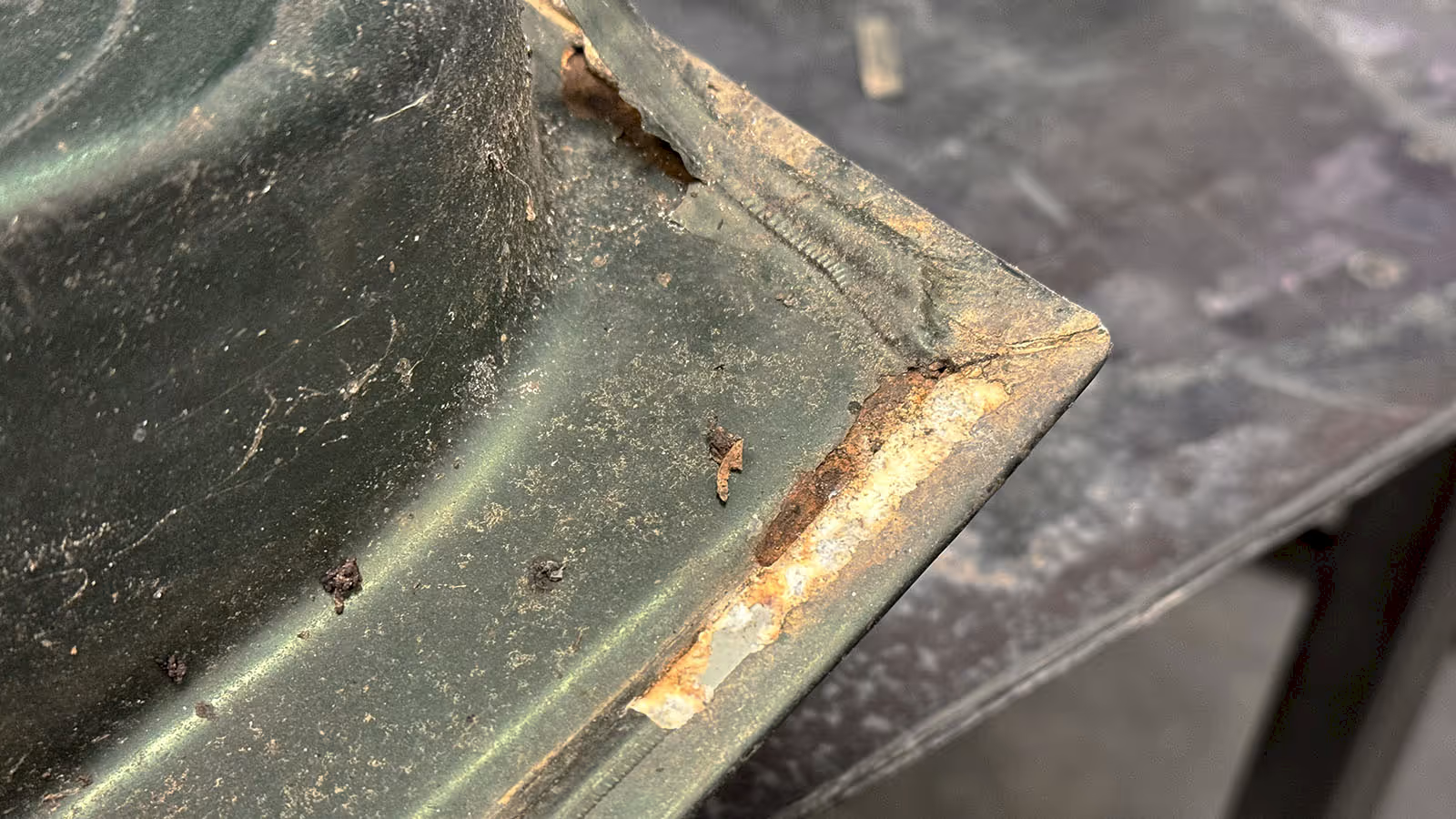
Connect two different metals in the presence of moisture and one of them will quietly start to dissolve. This is galvanic corrosion, the most common—and most preventable—form of metal attack in mixed-metal assemblies. Understanding how it works lets engineers avoid failures that no amount of paint alone can stop.
The Principle: A Battery You Never Asked For
Galvanic corrosion is an electrochemical reaction. When two dissimilar metals are electrically connected and share an electrolyte, the more active metal loses electrons and becomes the anode, dissolving into corrosion products. The more noble metal becomes the cathode and is protected. The pair behaves exactly like a battery cell—except the “current” destroys the anode.
Which Metals Corrode First
Metals can be ranked by their tendency to corrode in a given electrolyte. The farther apart two metals are on the galvanic series, the stronger the driving force. A simplified seawater series, from most active (anodic) to most noble (cathodic), looks like this:
| Metal | Role in a Galvanic Couple | What It Means in Practice |
|---|---|---|
| Magnesium & alloys | Strongest anode | Corrodes fastest of all; used as sacrificial anodes on steel hulls and pipelines. |
| Zinc | Active anode | More active than steel — this is exactly how galvanizing and zinc-flake coatings protect fasteners. |
| Aluminium & alloys | Anode to steel / copper | Aluminium corrodes rapidly when bolted to stainless or copper in salt service. |
| Carbon steel | Anode to stainless / copper | Steel bolts corrode sacrificially against stainless-steel frames and brackets. |
| Lead, tin | Mid-range | Fairly stable; only mild galvanic risk in most assemblies. |
| Copper & brass | Noble | Protected itself, but accelerates corrosion on any adjacent steel or aluminium. |
| Stainless steel (passive) | Noble | Does not corrode, but turns the metal it touches into the anode. |
| Titanium, gold | Most noble | Essentially inert; severe galvanic risk to any active metal they are joined to. |
The Three Factors That Decide Severity
- Potential difference. The wider the gap in the series, the faster the anode corrodes. A carbon-steel bolt in titanium is far worse than in another carbon-steel part.
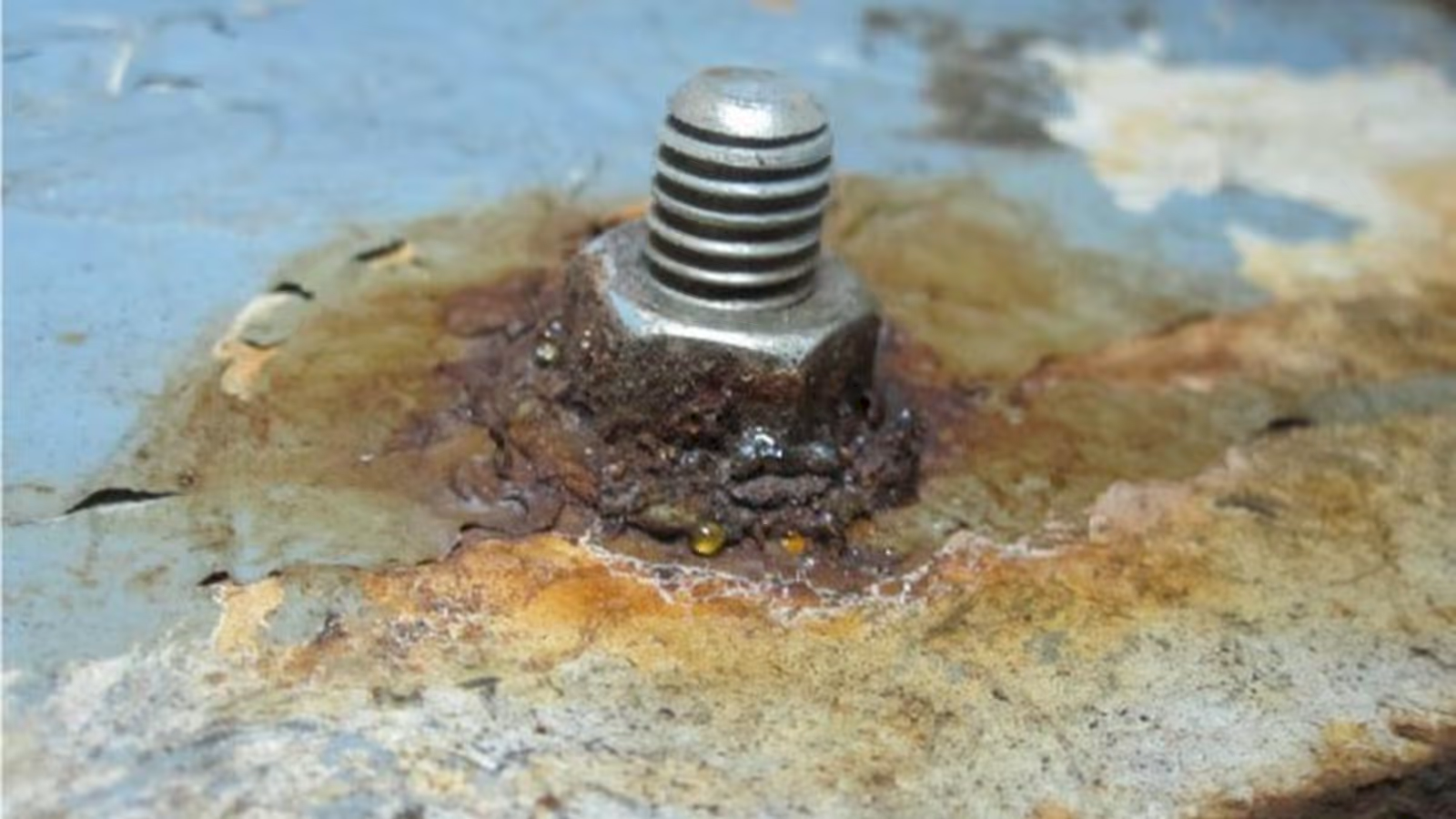
- Area ratio. The single most dangerous factor. A small anode joined to a large cathode concentrates all the corrosion onto a tiny area, producing rapid, deep attack. A small steel bolt in a large stainless plate is a worst case; a large zinc coating on a small steel part is deliberately safe.
- Electrolyte. Galvanic corrosion needs moisture and ions. It is negligible in dry air and severe in seawater, road salt, or any conductive wetting. Temperature and pollution also raise the rate.
Classic Problem Couples
- Carbon steel + stainless steel: the carbon-steel fastener or bracket corrodes sacrificially. Extremely common on frames and structures.
- Aluminium + copper / steel: aluminium is far more active and corrodes rapidly where the two meet.
- Zinc + steel: the useful couple—zinc is more active, so it protects the steel. This is exactly how galvanized and zinc-flake coatings work.
How to Prevent It
- Break the electrical path. Use insulating washers, gaskets, or coatings between dissimilar metals so no current can flow.
- Match materials. Keep metals close together on the galvanic series wherever possible.
- Control the area ratio. Never let a small active part face a large noble part—design so that any unavoidable anode is large and the cathode is small.
- Use sacrificial coatings. A zinc or zinc-flake layer turns the coating into the anode, so the base metal stays protected even where the film is scratched.
- Avoid condensation traps. Drain water away from mixed-metal joints and keep them dry.
Why Coating Choice Matters
Paint alone rarely stops galvanic corrosion at a mixed-metal joint, because any scratch re-opens the circuit. The reliable approach is a sacrificial coating: zinc, zinc-flake (Dacromet-type), or zinc-rich systems. These coatings corrode instead of the base metal, and because the zinc is present across a large area while the exposed steel defect is small, the protective area ratio works in the steel’s favor. For bolted mixed-metal assemblies, this is why zinc-flake finishes are specified across automotive, wind energy, and infrastructure applications.
Galvanic corrosion is not mysterious—it follows clear electrochemical rules. Match your metals, control the area ratio, keep joints dry, and put a sacrificial coating where you cannot separate them. Do that, and the “battery” never gets built in the first place.