How Salt Spray Testing Predicts Real-World Corrosion Resistance
How Salt Spray Testing Predicts Real-World Corrosion Resistance
Salt spray testing is the most widely used laboratory method for evaluating corrosion protection, and it is also the most widely misunderstood. A result like “1000 hours salt spray” appears on datasheets, coating certificates, and product claims everywhere. But what does that number actually mean—and can it really predict how long a coating will survive in the field?
What Salt Spray Testing Actually Does
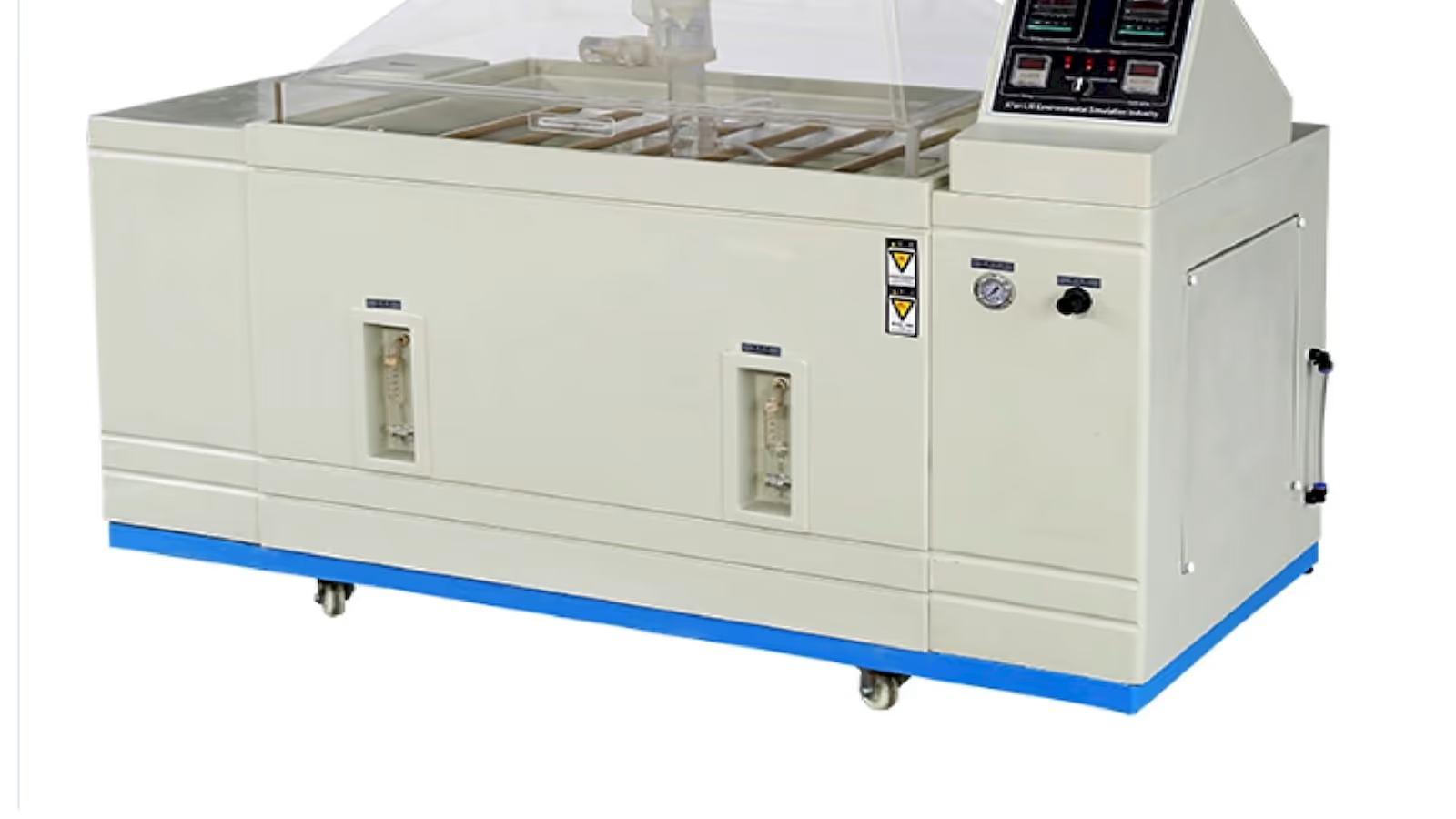
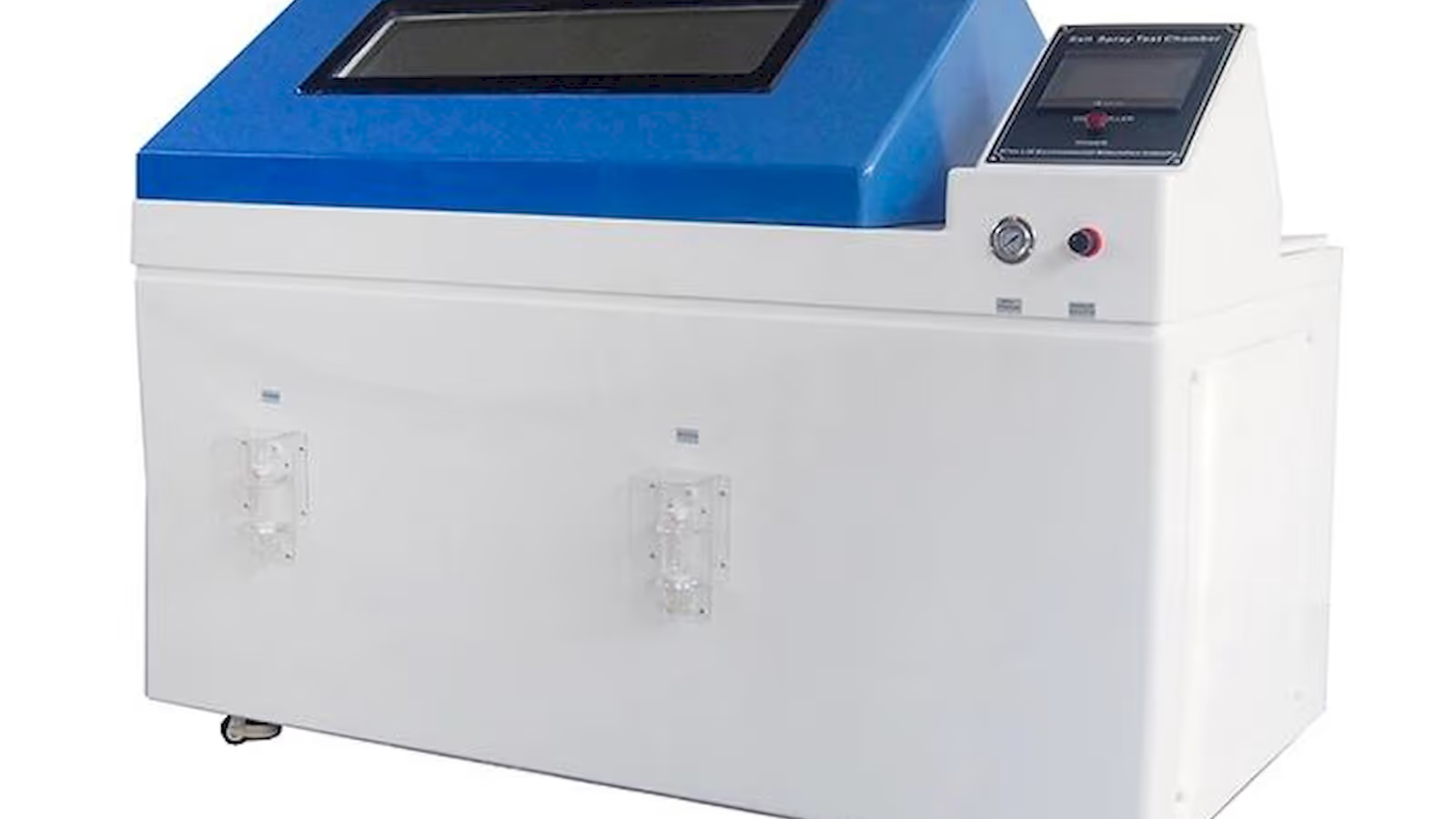
The test exposes coated samples to a controlled saline fog inside a sealed chamber. The two most common standards are ASTM B117 and ISO 9227, both of which spray a 5% sodium chloride solution at around 35 °C. The chamber is kept continuously fogged, so the sample surface stays wet with salt solution for the entire test.
Three common variants are used depending on how aggressive the evaluation needs to be:
NSS (neutral salt spray)—plain 5% NaCl, the baseline for most general coatings.
AASS (acetic acid salt spray)—acidified with acetic acid to speed up attack.
CASS (copper-accelerated acetic acid salt spray)—adds copper salt, the most aggressive, often used for decorative and automotive finishes.
The Big Misconception: Hours ≠ Years
The most common error is converting test hours directly into service life, as in “1000 hours equals one year outdoors.” This is not valid. ASTM B117 is a constant, unrealistically severe exposure—a continuous salt fog that rarely matches any real climate. Real-world corrosion depends on wet/dry cycling, ultraviolet light, temperature swings, pollution, and rainfall, none of which the basic test reproduces.
Salt spray hours are a comparative yardstick, not a lifespan forecast. The same coating can survive 1000 hours in the chamber and behave very differently in a coastal versus an inland industrial site.
Why Cyclic Tests Are More Realistic
Because real service alternates between wet and dry, accelerated tests that replicate this cycling give far more meaningful results. Cyclic corrosion testing, such as Prohesion (ASTM G85, Annex A5) and various automotive cyclic protocols, alternates salt fog, humidity, and drying phases. This cycling reproduces the natural corrosion mechanism much more faithfully than a constant fog, so results correlate better with outdoor exposure panels.
How Coating Families Typically Perform
Across industry datasheets and manufacturer publications, representative neutral salt spray values (time to red rust) for common protective systems fall into these bands:
Coating System
Typical NSS, Time to Red Rust
Notes
Electroplated zinc (thin, ≈5–15 µm)
≈24–300 h
Chromate passivation can extend toward ≈500 h
Hot-dip galvanized (≈45–75 µm)
≈300–1000 h
Thicker zinc, uneven on threads
Zinc-flake / Dacromet-type
≥1000 h (typically 1000–1200 h)
Sacrificial + barrier, hydrogen-free
Zinc-rich primer (high zinc content)
≈600–3000+ h
System- and zinc-content dependent
Using Salt Spray Data Correctly
The right way to use a salt spray result is as a quality-control and comparison tool: it verifies that a coating process is consistent, and it lets you rank candidate coatings under identical conditions. To predict field life, pair it with cyclic corrosion testing, outdoor exposure at a representative site, and a clear understanding of the service environment defined by standards such as ISO 9223 and ISO 12944.
In short, salt spray hours tell you whether a coating is in the right league. They do not tell you its exact lifetime. Read the number as a ranking, not a prophecy, and combine it with real-environment data before committing to a protection strategy.